 Image 1 of 1
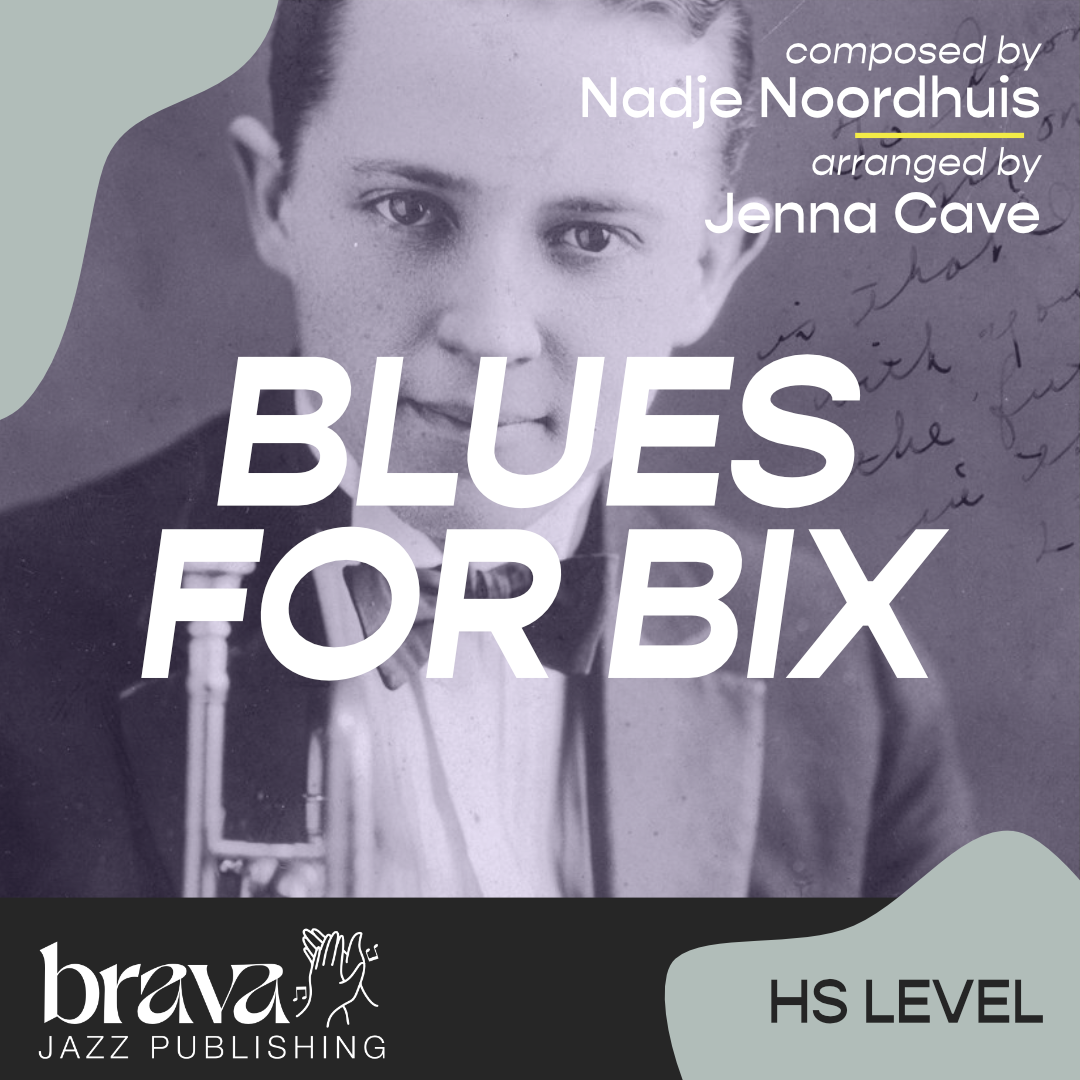
Nadje Noordhuis’ “Blues for Bix” is a tribute to one of jazz's most enduring voices: the legendary cornetist Bix Beiderbecke. Renowned for his luminous tone, effortless lyricism, and singular melodic imagination, Beiderbecke left an indelible mark on jazz despite his tragically short life.
Rather than imitating his style, Nadje Noordhuis' composition celebrates the spirit of his music—its elegance, clarity, and wistful beauty. Jenna Cave's big band arrangement honors that legacy by weaving together blues feeling with lush orchestration, offering a contemporary salute to an artist whose influence continues to resonate across generations of jazz musicians.
Blues for Bix offers a special opportunity to feature a solo trumpeter within the ensemble. The soloist frequently carries the primary melodic line through the chart and, beginning at Letter G, has the chance to explore improvisation while interacting with interjections and responses from the ensemble. An open solo section at Letter E also provides an opportunity to feature a saxophonist or a member of the rhythm section.
Though much of the rhythm section parts are written out, performers should feel license to ad lib according to their abilities.
Level: High School
5 saxes/4 trumpets + solo trumpet/4 trombones/guitar, piano, bass, drums
Solo sections for: solo trumpet and a saxophonist/rhythm section player
Highest note for lead trumpet = Concert A5 (written high B)
Highest note for lead trombone = Concert G4
Nadje Noordhuis’ “Blues for Bix” is a tribute to one of jazz's most enduring voices: the legendary cornetist Bix Beiderbecke. Renowned for his luminous tone, effortless lyricism, and singular melodic imagination, Beiderbecke left an indelible mark on jazz despite his tragically short life.
Rather than imitating his style, Nadje Noordhuis' composition celebrates the spirit of his music—its elegance, clarity, and wistful beauty. Jenna Cave's big band arrangement honors that legacy by weaving together blues feeling with lush orchestration, offering a contemporary salute to an artist whose influence continues to resonate across generations of jazz musicians.
Blues for Bix offers a special opportunity to feature a solo trumpeter within the ensemble. The soloist frequently carries the primary melodic line through the chart and, beginning at Letter G, has the chance to explore improvisation while interacting with interjections and responses from the ensemble. An open solo section at Letter E also provides an opportunity to feature a saxophonist or a member of the rhythm section.
Though much of the rhythm section parts are written out, performers should feel license to ad lib according to their abilities.
Level: High School
5 saxes/4 trumpets + solo trumpet/4 trombones/guitar, piano, bass, drums
Solo sections for: solo trumpet and a saxophonist/rhythm section player
Highest note for lead trumpet = Concert A5 (written high B)
Highest note for lead trombone = Concert G4